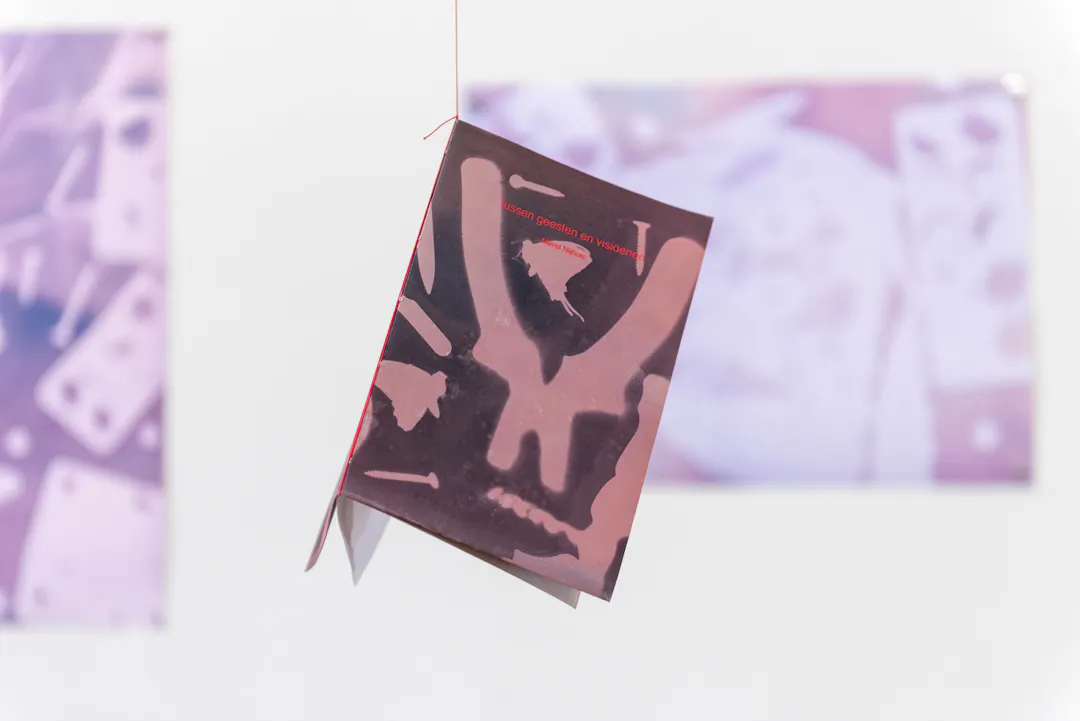
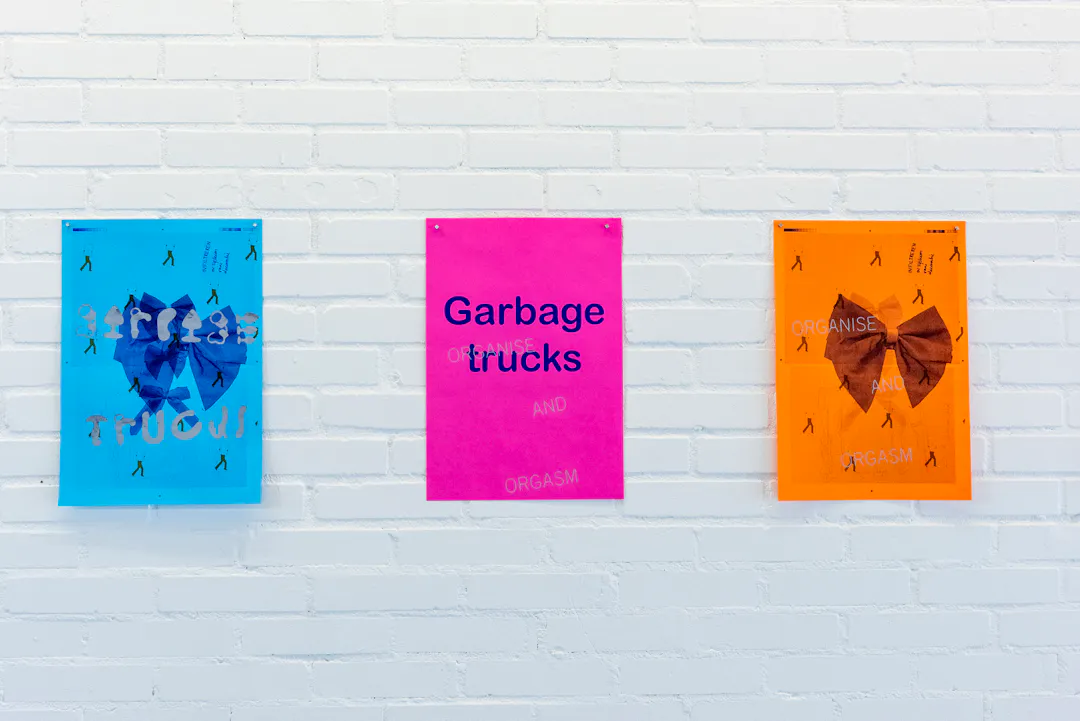
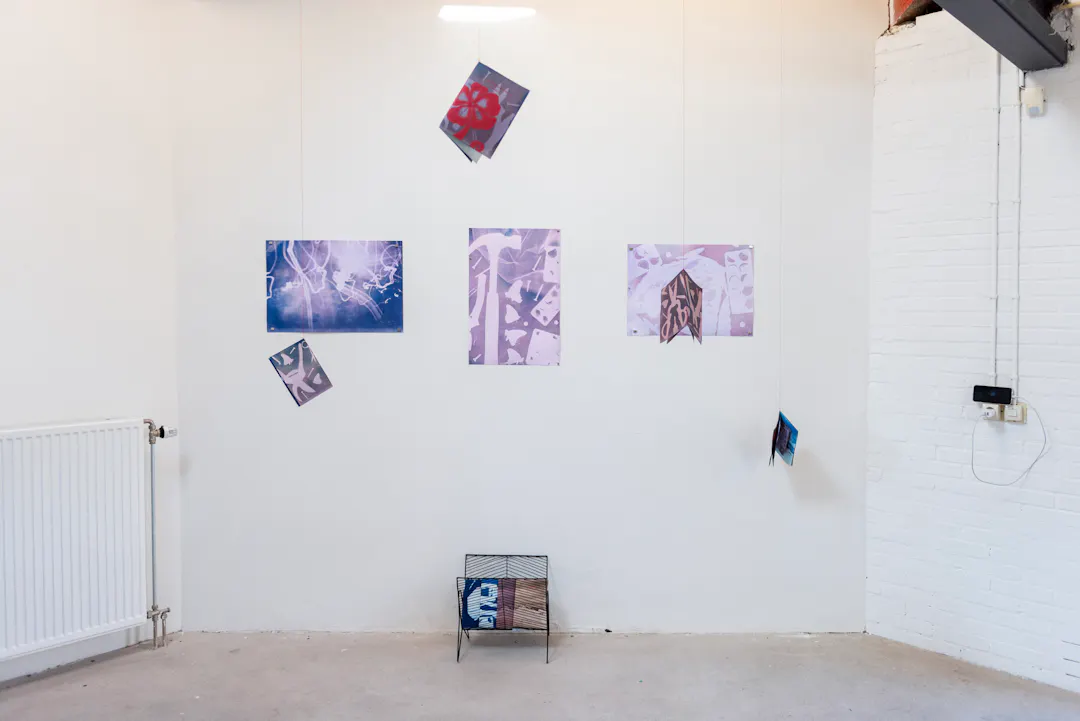
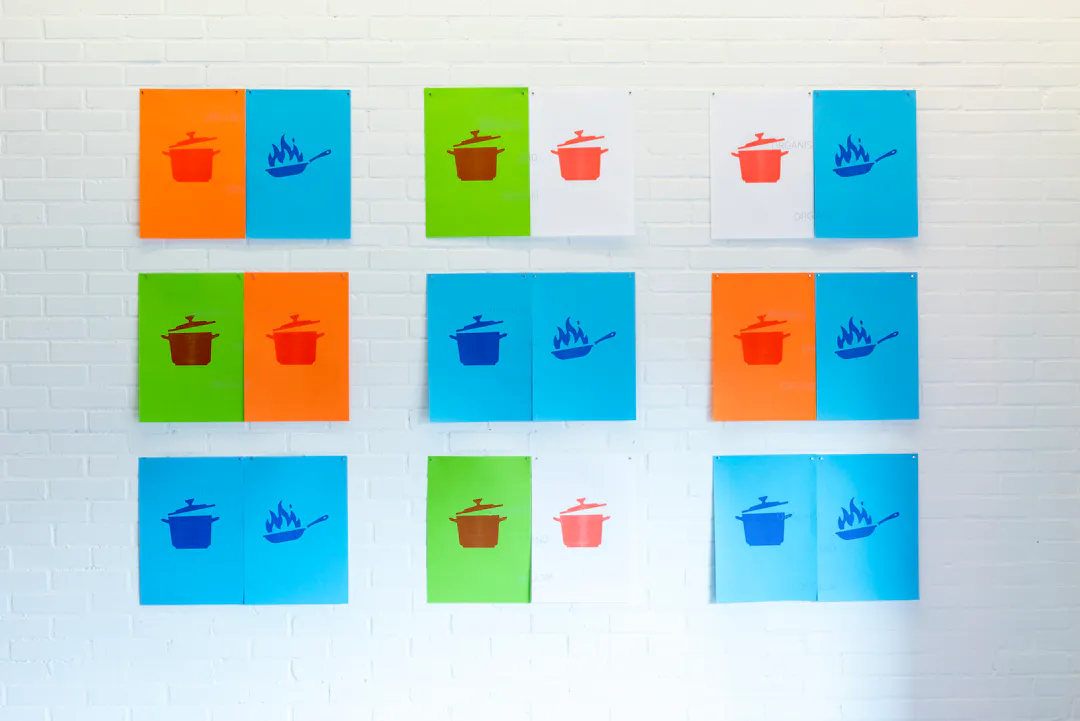
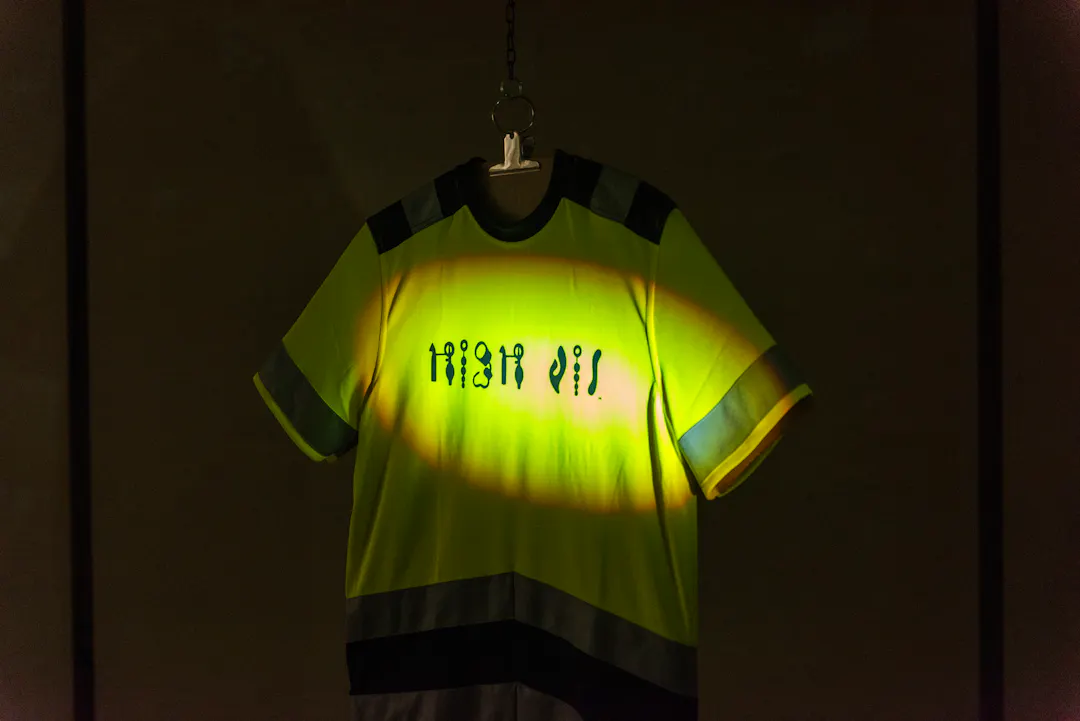
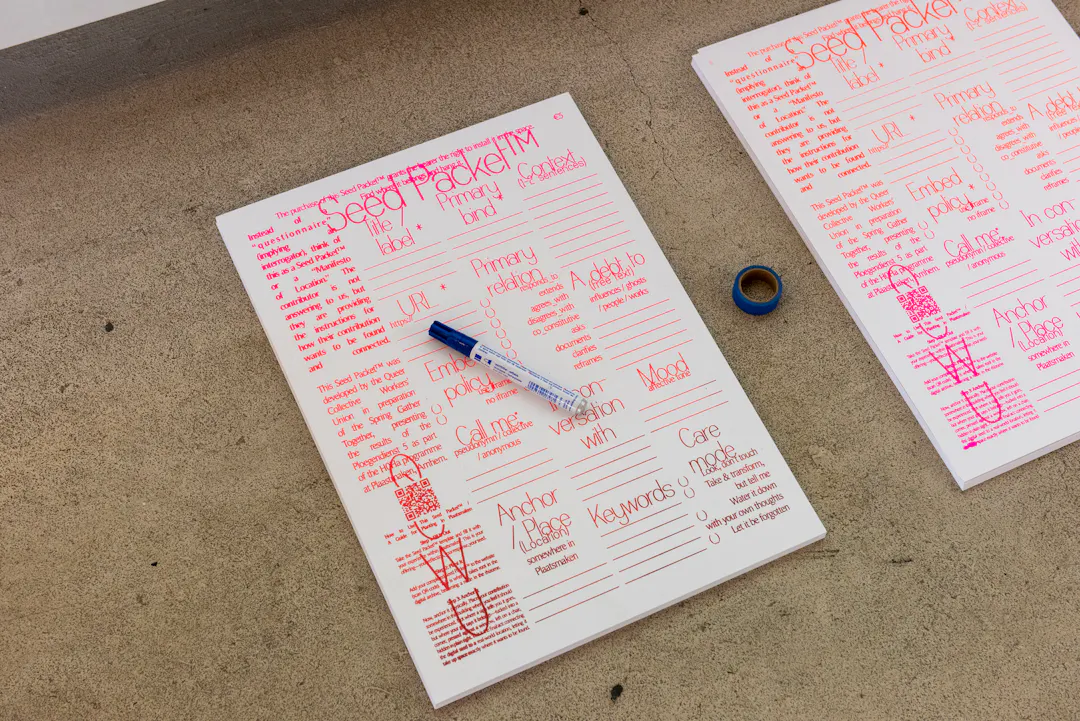
The results of Ploegendienst 5, part of the H0ha programme.
Ploegendienst 5 | Jivan van der Ende, Merel Nijhuis and Queer Collective Workers’ Union
Work period: January – March 2026
Spring Gather Together: March 21, 2026
On show: March 21 – May 23, 2026
Part of the H0ha program, curated by the collective Sunflower Soup. In this multi-year program, the workshops of Plaatsmaken are used to experiment with forms of protest and resistance through image and language. Poets, visual artists, activists, and publishers are invited to collaborate at Plaatsmaken in so-called 'Ploegendiensten' (work shifts).
About Ploegendienst 5
Artists Merel Nijhuis, Jivan van der Ende and the Queer Collective Workers’ Union, address the visible and invisible aspects of labour, and the emotional and physical pain it comes with.
Within H0ha, questions around labour are recurring. When we chose the word Ploegendienst (‘work shift’), we were attracted to its proletarian or even socialist connotation. Of course there is a romantic side to this choice, but it also helped us to think about the way in which the different kinds of labour were compensated. In the first year of Hoha, all participants received the same hourly rate, but this turned out to be difficult to handle, because what precisely is labour? When does activist or artistic labour stop and start? And maybe, the difficulty is even more fundamental. Because etymologically, the word labour has the following background:
‘c. 1300, "a task, a project" (such as the labors of Hercules); later "exertion of the body; trouble, difficulty, hardship" (late 14c.), from Old French labor "toil, work, exertion, task; tribulation, suffering" (12c., Modern French labeur), from Latin labor "toil, exertion; hardship, pain, fatigue; a work, a product of labor," a word of uncertain origin.’
That brings us to the hardships that seem to be inseparable from facing uneasy truths, which in turn seem to be inseparable from doing activism. It might be justified to say that the labour of Ploegendienst 5 consists both of printmaking and dealing with pain.
Thanks to the Mondriaan Fund and the Municipality of Arnhem.